Farewell Jill Ellis

Today I learned that Jill Ellis, the U.S. Women’s National Team Head Coach, will be stepping down following their victory tour. The end of this tour, October, has led to more controversy surrounding the team. The main question revolving the team is who will take the reins of leadership and be the new coach. This task has to be extremely daunting as Ellis is leaving as the most decorated US coach in World Cup history with an official record of 102-7-18. Not only does she have a fantastic record to leave a legacy with, she is also the first coach in history to win two Women’s World Cups.

Despite her success, Ellis has faced consistent criticism regarding her coaching skills. Many critics believe she is simply riding the coattails of the team’s world class talent such as Alex Morgan and Julie Ertz rather than truly leading the team herself. While she was fortunate enough to have an incredibly talented team, I believe she was an exceptional coach despite her questionable decisions at times. As a former player, there were plenty of decisions I questioned but at the same time, I have to remember that it is not my place to judge her decisions as she, ultimately, was the head coach and I was not. On another note, I greatly admired the way Ellis backed her players and allowed them to represent and stand up for themselves. She could have easily tried to subdue them and “make them know their place” as professional soccer players. Instead, she backed their decisions to stand up for equal pay and helped further athletic opportunities for girls and women in sports. While I am excited to see who will takeover as the USWNT coach, I will miss Ellis as she was a great influence on the team and has achieved insurmountable success in her five-year tenure as the national team coach. At this point, I am grateful to have seen her impact on American women’s soccer.

Farewell Jill Ellis.
USWNT 2019 World Cup Pride

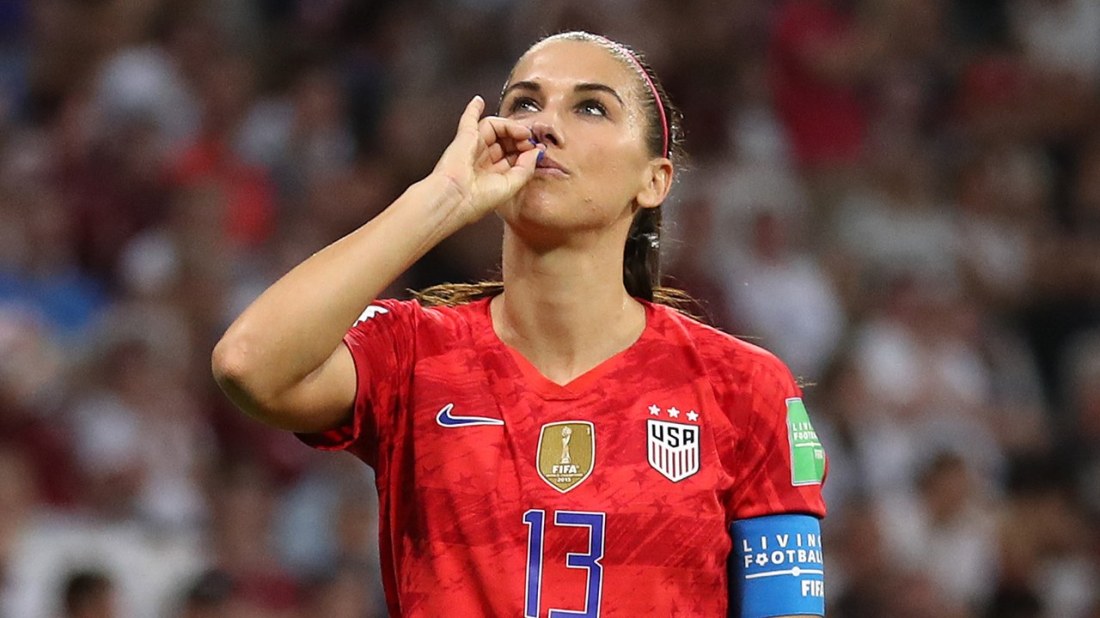
It has only been ten days since the U.S. Women’s National Team won the 2019 Women’s World Cup and the debate over their pride regarding their skill is slowly beginning to die down. Throughout the tournament, the American women have broken numerous records including having the greatest victory margin in men’s and women’s World Cup history and scoring the most goals in a single Women’s World Cup game. Not only have the women established their moment in sports history, they have been unashamed of their accompanied celebrations. As they continuously broke World Cup records and celebrated accordingly, their pride and enthusiasm were consistently criticized. All of this criticism began as a result of the Americans’ first group stage game when they dominated Thailand in a 13-0 match and the women celebrated each goal with great enthusiasm. Numerous critics voiced their disapproval of the women’s celebrations.

Personally, I feel that any criticism regarding their celebrations is quite ridiculous. These women create one of the most talented soccer teams in the world and should not be criticized for their incredible accomplishments, especially when those accomplishments take place in the most prestigious athletic competition that only occurs once every four years. They should be permitted to take pride and enjoy their post-goal or post-game celebrations. A heavily debated situation during this tournament was how the women are being criticized when men would not be for the same celebrations and actions. Plenty of professional male soccer players have had exuberant celebrations and rarely suffer the level of criticism the women have. Male players have earned many cards for their over-the-top celebrations, but these have been disregarded by critics suggesting that these are simply “a part of the game”. This controversy only fueled the Americans’ pride as they sought, and continue to seek, social and monetary equality. As a former player, I do not understand how anyone can possible criticize these women for making soccer history as they won, and enjoyed, their fourth World Cup title for the United States.

VAR in the Women’s World Cup

It is no secret that technology has experienced tremendous growth since its conception. Now that technology has established its place in society, I believe everyone understands it is here to stay. While there are plenty of positives from technological advancements such as the ability to be instantly connected to the media, family, and the world pretty much all the time, there are situations in which technology has been greatly criticized. One such situation includes the use of VAR, video assistant referee, during the 2019 Women’s World Cup.

Soccer fans wait patiently for the World Cup to arrive every four years, whether it be the men’s or women’s tournament, and national pride spikes whenever fans see their nation’s team perform well in this tournament. The World Cup has the power to unite fans throughout the world as they bond over the “beautiful game” and look forward to watching the world’s most elite soccer teams compete. However, plenty of controversy and criticism have come to light during the current Women’s World Cup, as the usage of VAR has eliminated teams and enraged fans. The implementation of VAR into this tournament aimed at using the technology to eliminate blatant errors or serious incidents that may have been missed by a referee such as giving a penalty to the wrong player. While the intent of using VAR is reasonable, fans, players, and teams have become outraged as it seems as if referees are using the system to nitpick minimal rule infractions rather than to genuinely review if a play was intentionally meant to harm another player. A few games have resulted in powerhouse teams being eliminated due to referees using the VAR to call minor infractions that otherwise would never be called which has left fans outraged and players devastated.

Personally, I am not a fan of using the VAR system because, as a former collegiate player, I believe it is ruining the game. For me, the most beautiful part of soccer is its unpredictability and the fact that it was not dependent upon video replays. This frustration is resonating amongst fans and teams at the World Cup as games are being delayed and the amount of stoppage time being added to games is greater than ever before. Additionally, one of the most infuriating factors regarding the use of the VAR system is that it was not used or tested in the women’s game until March 2019, only two months prior to the start of the World Cup. This is a direct insult to the women’s game as VAR was used in many games beginning at least six months before it was used in the Men’s World Cup last summer. While I do not favor the usage of VAR during the World Cup, I understand its importance and how it can help advance the game. Hopefully, the quirks associated with VAR will be fixed in the near future so the system will genuinely enhance the game rather than hinder it.

Sports and the Media

Sports and the media have a long withstanding relationship that benefits both parties mutually. Since the creation of radio and television, sports coverage has grown tremendously in comparison to the days in which the only forms of coverage were from interviews and printed articles. Nowadays, television network contracts are commonly worth millions of dollars as various networks compete for the rights to broadcast major sporting events such as the Superbowl and World Cup. Competition between major broadcasters perpetuate the symbiotic relationship between sports and the media as they constantly feed off one another. For instance, whenever a sport experiences a surge in popularity such as the National Basketball Association’s Championship then the media coverage of that sport tends to dramatically increase as it promotes the sport resulting in an increase in consumer traffic to their platforms.

While sports heavily rely on the media, there are instances in which it affects athletes’ lives. For instance, when I competed on the women’s soccer team at the University of Southern Mississippi, we were required to submit our social media usernames for every platform we had to the athletic department as the compliance department monitored our social media posts. While this is a minor example of how the media can affect the lives of athletes, it felt quite major at the time. Personally, I did not have any social media accounts apart from Facebook, but I was still required to provide the athletic department with my name on Facebook as well as a link to my profile so they could monitor my activity. Our athletic program had strict rules on the type of content we were allowed to post as any negative or obscene posts could negatively reflect upon the program and university. For instance, as we were sponsored by Russell, we were heavily discouraged from posting any content in which we were wearing university issued athletic gear mixed with athletic gear from other brands such as a Nike headband. Though these types of social media posts may seem frivolous, many athletes were punished with additional conditioning, study-hall hours, and even suspension from their respective teams for not following the social media guidelines implemented by the athletic department.

Overall, I am a firm believer that the relationship between the media and sports is crucial to the future of both parties as they are dependent on each other. Without the incredible coverage from the media, I do not believe sports would have become as prominent in society as they are now.

United States Women’s National Team

The 2019 FIFA Women’s World Cup begins this Friday, June 7, 2019 with a kickoff between the host nation France and the Korea Republic. While this is largest platform for women’s soccer to showcase the exceptional talent amongst professional female players, it serves as a reminder that I have been fortunate enough to watch the United States Women’s National Team in person. I grew up playing soccer at the youth level as well as collegiately. For about ten years I have dreamed of being able to watch our national team compete live and this desire increased exponentially once Tobin Heath joined the team. One of my favorite players has always been longtime veteran, Megan Rapinoe, but once Heath joined the team, I was instantly drawn to her style of play and could not stop watching her incredible footwork. Fortunately, technology has seamlessly encompassed all aspects of sports and offers countless ways to watch and stay up to date. Despite the fact that Heath has been on the national team for approximately seven years, I have been able to watch a majority of games she has competed in for her club team as well as the national team due to services such as Fox Soccer which offer live streams of games. Additionally, when I have been unable to watch games, these services as well as sports applications have allowed me to remain updated as they provide immediate, continuous updates on live sports. Without these services and technological advancements, it is nearly impossible that I would have seen many of Heath’s games.

On April 4, 2019, I attended my first women’s national team game in Denver, Colorado. While this is an experience that I will cherish for the rest of my life, I am extremely grateful I do not have to physically attend each sports game I would like to watch. Without technology such as the internet, radio, and television, I would have to either physically attend any game I would like to watch or read printed articles about the game following the event. Personally, it is likely I would be less interested in sports if I did not have immediate, continuous access to sports as I heavily rely on the immediate access to this information. Additionally, this access allows millions to remain updated with their favorite teams, players, and organizations without having to physically attend events as it offers a much more convenient avenue to the events and information. Watching the Heath compete in Denver greatly increased my excitement for the World Cup which I will constantly stream from Fox Soccer. Overall, the development of technological innovation has had a great impact on sports as it has helped the industry grow, reach a greater audience, and connect fans to their favorite teams on a more personal level, especially since athletes are beginning to utilize social media more. Without these advancements, I do not believe sports would hold the status they do today.